
The language of evaluation and stance in crowdfunding project proposals
The language of evaluation and stance in crowdfunding project proposals
Alberto A. Vela-Rodrigo
University of Zaragoza / Spain
Abstract – Today, digital crowdfunding platforms allow researchers to increasingly use digital resources to reach and engage diversified audiences, making scientific content accessible to everyone. This paper explores how evaluation in text contributes information relevant to understanding how scientists use language to express their expert opinions of scientific research and their attitudes about the value of their projects. Starting from the compilation and analysis of a 50-science project corpus from Experiment.com, evaluative stance expressions in this work were classified according to Biber’s (2004) taxonomy into the following stance categories: verbs, adverbs, adjectives and nouns. Subsequently, genre analysis was applied to identify the discourse functions of these evaluative words in each rhetorical section of the project proposals. Results show that the analysed crowdfunding proposals are rich in stance verbs (52.65%) and, to a lesser extent, stance adjectives (23.52%), serving to express values of effort, improvement and diligence in the proposed projects, as well as judgement regarding experiments and ‘Lab Notes’ updates, respectively. This can be useful for both theoretical advancement and pedagogical purposes, that is, to apply scientists’ findings to digital communication teaching and learning.
Keywords – digital science; evaluation; stance-taking; crowdfunding; genre analysis
1. Introduction1
This study explores how the evaluation of texts informs our understanding of writers' stance-taking in crowdfunding scientific projects online. This exploration is deemed important because, as Goźdź-Roszkowski and Hunston (2016: 133) put it, evaluation and stance contribute “to the interactive property of language, to the recognition of how a text is organised, and to the connection between discourse and ideology.” The study of evaluation in texts helps to establish a relationship between linguistic concepts, discourse and ideas. Analysing evaluative language in crowdfunding proposals online can therefore be a helpful manner to understand how scientists use language in different ways to express their expert opinion of scientific research and their attitudes about the value of their projects. Exploring evaluation and stance also offers insights into how they look at their potential audience and how they engage with them. Evaluation in text is a key dimension when writing or composing a proposal in order to persuade the reader of the validity of the scientific knowledge and how the project can be backed (Millar et al. 2023).
The discourse function of evaluation has received increasing interest in the past decades (see Section 2), and it has been approached from different perspectives. Some authors have studied evaluative language use and stance expressions in written academic discourse (e.g., Hunston 2002; Camiciotti and Tognini-Bonelli 2004; Hyland 2005; Biber 2006; de Waard and Maat 2012), and in spoken academic discourse (Mauranen 2003; Swales and Burke 2003). Evaluation and stance have also been investigated in digital genres aimed at promoting public understanding and engagement with science, such as blogs, tweets, and citizen science projects (e.g., Smith 2015; Zou and Hyland 2019; Luzón and Pérez-Llantada 2022). However, and to the best of my knowledge, there are no research studies on the language of evaluation in the digital genre represented by crowdfunding proposals and this is the gap this study seeks to cover. Given that evaluation is key in academic and professional contexts and that its features and resources might differ across genres (Shaw 2003), it is essential for researchers to examine the evaluative dimension of crowdfunding discourse for both theoretical advancement and pedagogical purposes (i.e., to apply their findings to digital communication teaching and learning).
According to previous studies on the phraseology of crowdfunding project proposals from a lexical bundle perspective (Vela-Rodrigo 2023), lexical bundles conveying stance (e.g., will be able, will help us, would like to) are especially frequent in crowdfunding writing, representing more than one quarter of all word bundles of the analysed corpus. Therefore, it is deemed of interest to continue exploring the language of evaluation and stance in a similar corpus of scientific projects for this study. The study of evaluation in crowdfunding writing can help to understand and accept the researchers’ perspective when guiding the audience to accept their claims, and thus reflects the social action that the genre enacts, helping the democratization of science agenda. The research questions set out for the investigation of evaluative language are the following:
RQ1. What language features express evaluation in crowdfunding proposals online?
RQ2. What communicative functions do these features perform in the analysed texts?
RQ3. More broadly, how does evaluation, as a rhetorical strategy, reflect the social action that this genre enhances?
This paper is structured as follows. Section 2 provides a review of the literature on evaluation and stance, with particular emphasis on research within digital genres. The corpus used in this study is introduced in Section 3, along with the methods and tools employed for its analysis. The results are then presented and contextualized through illustrative examples in Section 4, allowing for a discussion of how these findings align with existing literature on stance, as well as the limitations of the present study. Section 5 rounds up the paper with a discussion of the main findings.
2. Previous research
2.1. Evaluation and stance taking
One of the main aspects in the construction of any discourse is how the writer feels intimately about the topic he/she is writing, representing kinds of meaning that might be ‘subjective’ in contrast to the ‘objective’ or ‘factual’ (Goźdź-Roszkowski and Hunston 2016: 133). Defined as “expression of the speaker or writer’s attitude or stance towards, viewpoint on, or feelings about the entities or propositions that he or she is talking about” (Thompson and Hunston 2000: 5), evaluation in academic and scientific discourse might seem unnecessary, and even contradictory, at first sight. However, as Hunston posited in her doctoral work (1989), and as subsequent English for Specific Purposes (ESP) and English for Academic Purposes (EAP) studies have corroborated, the particular value system shared by scientific writers and their readers, in which emotive or attitudinal language seem to be prohibited, is richer in evaluative meanings than expected by the nature of texts (Mauranen 2002; Jiang and Hyland 2015; Pérez-Llantada 2024a).
The language of evaluation has been studied from many different perspectives or disciplines, ranging from corpus linguistics, systemic-functional linguistics, and cognitive linguistics to sociocultural linguistics, conversation analysis and interactional linguistics. This may explain why many terms developed independently can be covered under the term ‘evaluation’ (Hunston and Thomson 2000), such as stance[taking] (Biber and Finegan 1989), subjectivity (Lyons 1981), sentiment analysis (Turney 2002; Nasukawa and Yi 2003), opinion mining (Dave et al. 2003) or appraisal (Martin and White 2005), yet without a no agreed-upon conception of all of them among analysts. Stance taking, the perspective followed in this paper, emphasises the role of the discourse participants’ choice of language to achieve their communicative intentions.
From a methodological approach, some corpus linguists have studied stance to describe specific words or phrases that mark an attitude in a text, such as Biber et al. (1999), who divided the category of stance both grammatically and semantically in different sets of words. An important contribution on stance taking in academic discourse is the work of Hyland (2005), who studied the means by which interaction is achieved in academic argument. Hyland’s metadiscourse framework has been particularly influential in the study of evaluation in academic texts (Hyland 1999, 2005). In his analysis of 240 published research articles from eight different disciplines, this author found that writers in the humanities and social sciences took more explicitly involved personal positions when representing themselves and their work than those in the hard sciences. However, all rhetorical choices from both the humanities and scientific fields revealed the writers’ efforts to persuade their audiences of their claims, a finding supported in subsequent publications on metadiscourse and stance taking in texts (e.g., Sancho-Guinda and Hyland 2012; Jiang and Hyland 2015; Hyland and Jiang 2017). On the other hand, stance taking is a frequent activity in language use and has a role in shaping language form (Englebretson 2007), tailoring information and accommodating utterances to the aims of a specific genre. Several studies in corpus linguistics have notably contributed to the description of the lexis and grammar features that convey evaluation and stance in different registers (e.g., Biber et al. 1999; Biber 2004, and especially the taxonomy proposed by Biber 2006), with particular attention to adverbials (Conrad and Biber 2000), adjectives and nouns (Hunston and Sinclair 2000 with their ‘local grammar’ for stance taking) and English modals (Thompson and Hunston 2000). Particularly salient is the analysis carried out by Hunston (2007, 2011) to investigate stance quantitatively and qualitatively, that is, ethnographically. Hunston addresses the question of where in a paragraph stance is articulated (stance location) by exploring concordances for four stance markers in the Bank of English. The purpose was to observe multiple uses of the words/phrases tragedy, dramatic, to the point of, an increasingly accelerated pace in context using corpus analytical procedures. Hunston proposes that, taken together, explicit (i.e., what is said) and implicit (i.e., what is implicated) stance indicators form the evaluative basis of a given text, given that evaluative meanings are cumulative and occur across phrases in texts. Furthermore, what distinguishes subjective from objective texts is not “the quantity of explicitly evaluative lexical items in each, but the embedding or otherwise of those items in phraseologies, which frequently co-occur with stance” (Hunston 2007: 83). Those phraseologies can be identified intuitively, but since intuition can sometimes be unreliable, a close examination of many examples is required to corroborate such perception on evaluation (Hunston 2007).
2.2. Stance taking in digital genres
Analysing evaluation and stance in digital genres of science communication has helped to determine how scientists use language in particular ways when recontextualising specialized information and adapt specialized content to diversified audiences. Evaluation has been studied in academic blogs in the social sciences (Luzón 2012, 2013; Zou and Hyland 2019), Twitter (now X) discourse (Smith 2015: Luzón 2023; Villares 2023), Open Laboratory Notebooks (Luzón and Pérez-Llantada 2022) and online data articles (Pérez-Llantada 2022), among others. In these genres, expressions of epistemic stance (e.g., it appears that, this may be due to) make arguments and claims tentative. For example, in Twitter discourse, tweets are composed using a variety of (linguistic and non-linguistic) expressions of stance and engagement, as shown by Luzón and Albero-Posac (2020) in their analysis of 150 tweets from linguistic conferences. Luzón and Pérez-Llantada (2022) conducted a research case study to analyse the use of language features realising different communicative functions in Spanish research groups on Twitter. For the analysis of linguistic forms in a corpus of 600 tweets in different fields of STEM with various communicative functions (e.g., networking, self-promotion, dissemination), they focused mainly on Hyland’s (2005) model for stance and engagement. Their results corroborated previous results by Luzón and Albero-Posac (2020: 46), showing that scientists use evaluative vocabulary (e.g., amazing talk, great talk) to praise other researchers’ work and engage in positive public evaluation of their own work. The use of evaluative language has also been reported in relation to processes of knowledge recontextualization in participatory science genres such as citizen science projects. For example, Pérez-Llantada and Luzón (2023: 101) explain that evaluation of content is realised by non-finite clauses (e.g., adverb phrases and non-finite verb phrases encapsulating to-infinitive clauses) making overt the researcher’s perspective towards the utterances (e.g., to actually identify this group; hopefully the new network will return images). Other digital genres, such as research blogs, are also rich in evaluative language, which is used to construct credibility online (Rahimpour 2014; Mauranen 2021). At the same time, the language of evaluation in blogs can be traced in digital comments, especially when participants engage in debates and negotiate disagreement as it happens in Reddit (Batchelor 2023). Here they can express attitudes (good-bad, positive-negative) through well-known features of digital communication (e.g., ‘likes’ by clicking on a button; Mauranen 2021: 33).
Some authors analyse evaluation in web-mediated genres such as webpages through the use of rhetorical strategies and linguistic resources that convey stance and persuasion (Askehave and Nielsen 2005), although their approach is equivalent to the one used in this paper, that is, linguistic features realising discourse (evaluative) functions. Other digital genres that are also characterised by the use of evaluative language are crowdfunding projects. In a scientific context of growing interdependence at a global level, the analysis of the language of crowdfunding platforms is interesting. This is a new genre, which stands out for their practical, dynamic and participatory nature, offering researchers the opportunity to share and disseminate their work, while interacting with a non-specialized public. In these projects evaluative markers are used to express an opinion or to make explicit the significance of a project proposal and claim centrality of the research topic, for example, by using adjectival pre-modifiers in complex noun phrases, as explained by Pérez-Llantada (2021a) in her analysis of linguistic features of biomedical projects in Precipita, the Spanish platform for crowdfunding science. Similarly, in spoken genres such as TED talks, presenters use stance markers to express judgments and subjectively position themselves (Scotto di Carlo 2014).
3. Data and methods
3.1. Corpus description
For the present study a small-scale corpus of 50 proposals for crowdfunding scientific research was compiled from Experiment.com,2 a platform for crowdfunding science across different disciplines. The corpus totalled 140,478 words and considers the information of all sections or tabs in which this website is organised from left to right (‘Overview’, ‘Methods’, ‘Lab Notes’ and ‘Discussion’). Every section has distinct functionalities and therefore recall move organization (Vela-Rodrigo 2025). The ‘Overview’ and ‘Methods’ sections provide a summary of the methods and procedures to realize the project goals, including a timeline and the pledged amount of money for every project. In the ‘Lab Notes’ section researchers post updates for their backers in a similar way as blogs also do and interaction with followers is normally reserved for the ‘Discussion’ tab, a space in which backers and researchers can post their comments and express their gratitude or moral support (for a more detailed description see also Mehlenbacher 2019; Luzón and Pérez-Llantada 2022).3
3.2. Evaluative model
A theoretical and analytical model widely spread and used in the study of evaluation is that of stance and engagement developed by Hyland (2005). The model provides a comprehensive and integrated way of examining the means by which interaction is achieved in academic argument. It classifies metadiscourse markers into four categories: 1) hedges, which present information as opinion (e.g., might); 2) boosters, which signal involvement with the topic (e.g., obviously); 3) attitude markers, which convey the writer’s affective stance using stance verbs, adverbs, and adjectives; and 3) self-mentions, which refer to the use of first-person pronouns to present affective information. This model provides a very clear and easy-to-apply codified typology of the resources that writers use to express their positions and has been used to study digital genres (e.g., Zou and Hyland 2019; Luzón and Albero-Posac 2020; Luzón and Pérez-Llantada 2022; Luzón 2023; Villares 2023). Two other models that have also been widely used in the study of evaluation in academic writing are the ‘local grammar’ by Hunston and Thompson (2000) and the corpus-based grammatical investigations of Conrad and Biber (2000) with subsequent applications in studies by Biber (2004, 2006). However, to the best of my knowledge, these models have not yet been applied in the study of digital genres. Biber’s (2004, 2006) studies of evaluation and stance in spoken and written academic discourses offer a very versatile taxonomy for the analysis of stance ‘content words’ (Biber 2004: 123). This model has been chosen for this study since it is very convenient for the analysis of an emerging genre as digital crowdfunding proposal. It offers a very structured and clear framework easy to apply across academic genres, especially considering that crowdfunding proposals borrow certain discursive features with the traditional grant proposal (Mehlenbacher 2017, 2019; Pérez-Llantada 2021b).
Because the present study is exploratory, Biber’s (2006: 112) taxonomy was simplified and adapted for the analysis, including groups of similar categories under the same general term (e.g., modal verbs have been combined with controlling verbs in to/that clauses). The resulting taxonomy classifies stance words according to their grammatical domain and semantic function considering markers of stance in that/to-clauses together, according to every word category, that is, stance adverbs, stance verbs (including
(semi-)modals), stance adjectives and stance nouns. This adapted taxonomy (Table 1) is more appropriate to apply in a small corpus such as the one used in the present study, especially when it comes to offering comparative data across rhetorical sections.
|
Stance Category |
Subcategories |
Examples |
|
Stance Verbs |
- Modal / Semimodal verbs |
can, could, may, will |
|
- Attitude/Intention/Desire |
expect, intend |
|
|
- Non -factive/Communication speech verbs |
address, relate, inform |
|
|
- Factive verbs (certainty) |
know, ensure |
|
|
- Effort/Facilitation |
allow, help, support |
|
|
- Likelihood/Cognition |
estimate, consider |
|
|
Stance Adverbs |
- Attitude (evaluation/expectation) |
amazingly, importantly |
|
- Certainty |
certainly, in fact |
|
|
- Communication speech |
additionally, finally |
|
|
- Likelihood |
perhaps, probably |
|
| Stance Nouns |
- Epistemic/Attitudinal |
interest, love, success |
|
- Certainty |
evidence, expertise |
|
|
- Communication speech (including prepositional/noun phrases) |
in addition, a bit |
|
|
- Likelihood |
hypothesis, condition |
|
| Stance Adjectives
|
- Epistemic/Attitudinal |
good, bad |
|
- Certainty |
certain, sure |
|
|
- Communication |
explicit, informative |
|
|
- Likelihood |
probable, possible |
|
|
- Evaluative |
important, beautiful, interesting |
Table 1: Taxonomy of stance grammar particles adapted from Biber (2006)
The quantitative results of applying this taxonomy are based on raw counts, but, since the rhetorical sections contained a different number of words, the raw frequencies were normalised per 1,000 words to carry out the comparison across sections.
3.3. Identification of evaluative language
Regarding the analysis of stance features in this study, evaluative stance expressions were first identified through the extraction of content words and then classified manually into the following categories: verbs, adverbs, adjectives and nouns. Afterwards, they were filtered by selecting only those conveying evaluative meanings. The details of all the steps followed are detailed below.
The first step involved the automatic extraction of 15,781 content words (66,818 tokens) from the corpus. According to Biber (2004, 2006), content words are those that can convey evaluative meanings, therefore limiting the scope of the search was important. To identify the different types of content words Lancsbox 3.0.0 (Brezina and Platt 2023) was used, which allows automatic tagging of the corpus texts for different grammar categories previously converted to .txt format. This software offers an advanced search tool called Words Tool that filters the different lemmas or semantic domains of the words according to their frequency and dispersion. This tool was used to generate lists of word types occurring in each rhetorical section of the proposals.4
Table 2 shows the total counts (types) and tokens of each content word and their distribution in each section. This preliminary step enabled the extraction of content words that could potentially contain evaluative meanings, the analysed text representing 81.71% of all words in the corpus. The remaining word types correspond to other categories such as pronouns (e.g., I, this, mine), prepositions (e.g., under, against, of), determinants (e.g., the, a) conjunctions (e.g., and, or), and interjections (e.g., oh!, wow), were not considered for this study since they are not content words.
|
Category/ Section |
Overview |
Lab Notes |
Discussion |
||||
|
|
raw |
norm |
raw |
norm |
raw |
norm |
|
|
verbs |
types |
882 |
6.27 |
1,124 |
8 |
391 |
2.78 |
|
tokens |
6,264 |
44.59 |
7,953 |
56.61 |
1,857 |
13.21 |
|
|
adverbs |
types |
309 |
2.19 |
410 |
2.91 |
156 |
1.11 |
|
tokens |
1,669 |
8.32 |
3,170 |
22.56 |
780 |
5.55 |
|
|
adjectives |
types |
1,006 |
7.16 |
1,163 |
8.27 |
331 |
2.35 |
|
tokens |
4,995 |
35.55 |
5,391 |
38.37 |
1,109 |
7.89 |
|
|
nouns |
types |
3,753 |
26.71 |
4,794 |
34.12 |
1,462 |
10.4 |
|
tokens |
14,836 |
105.61 |
16,174 |
115.13 |
2,620 |
18.65 |
|
Table 2: Raw and normalised counts (per 1,000 words) of content word types and tokens across rhetorical sections
The resulting lists were subsequently checked and filtered manually to identify only those potentially evaluative words that conveyed evaluative meanings. For the identification of these evaluative words in context, I relied on Biber’s (2006) taxonomy and examples of previous classifications (Biber 2004: 133–135). Biber’s taxonomies offer a very intuitive and explanatory interpretive framework along the same lines of Hunston and Thompson’s (2000) local grammar, allowing retrieved data to be compared under premises, a method which has already proven to be useful for examining evaluation. For example, among the potentially evaluative word contents in this first checking, it is possible to find adjectives (e.g., different, good, important); nouns (e.g., love, opportunity, hope); adverbs (e.g., hopefully, sadly); and verbs (e.g., help, like, feel).
This manual process was assisted by the KWIC tool in Lancsbox 3.0.0, which helped to retrieve concordance lines and show the words that might convey evaluative meaning in its context. In other words, the KWIC tool allowed context-sensitive analysis. Grammars also informed the selection of evaluative markers. For example, according to Biber (2006), adjectives which act as a controlled word in that-clauses had an evaluative meaning; therefore the word (e.g., different in example (1) below) should be checked in context in order to see whether it is accompanied by prepositions such as from or any other phrase category, as in (1).
(1) micro-residues recovered within the intentional fires are different from the micro-residues recovered outside the fires.
Since in this sentence different does not act as an adjective controlling a that-clause, this token can be removed from the list of adjectives. Similarly, verbs can be controlled words in that-clauses and to-clauses, which means that it is necessary to check whether every verb in the preliminary list (e.g., hope) takes part in such clauses, as in (2).
(2) By examining the composition of shells, I hope to discover how variations in stable isotopic.
In this case, hope is part of a to-clause, therefore the verb has an evaluative meaning and can remain in the list. Table 3 shows the percentage of non-evaluative versus evaluative content words.
|
Section |
||||
|
Overview |
Lab notes |
Discussion |
||
|
Verbs |
Non. eval. |
3,249 (51.87%) |
4,856 (-60.16%) |
1,070 (57.62%) |
|
Eval. |
3,015 (48.13%) |
3,097 (39.84%) |
787 (42.38%) |
|
|
Adverbs |
Non. eval. |
1,198 (71.78%) |
2,634 (83.1%) |
571 (73.21%) |
|
Eval. |
471 (28.22%) |
536 (16.9%) |
209 (26.79%) |
|
|
Adjectives |
Non. eval. |
3,976 (79.59%) |
4,463 (82.78%) |
559 (50.41%) |
|
Eval. |
1,019 (20.41%) |
928 (17.22%) |
550 (49.59%) |
|
|
Nouns |
Non. eval. |
13,937 (93.93%) |
15,531 (96.03%) |
2,287 (87.3%) |
|
Eval. |
902 (6.07%) |
643 (3.97%) |
333 (12.7%) |
|
|
Totals |
Non. eval. |
12,516 (69.83%) |
27,484 (4.08%) |
4,487 (70.49%) |
|
Eval. |
5,407 (30.17%) |
5,204 (15.92%) |
1,879 (29.51%) |
|
Table 3: Distribution of non-evaluative and evaluative content words across rhetorical sections
The resulting lists of evaluative words amounted to 12,490 tokens, distributed as shown in Figure 1.
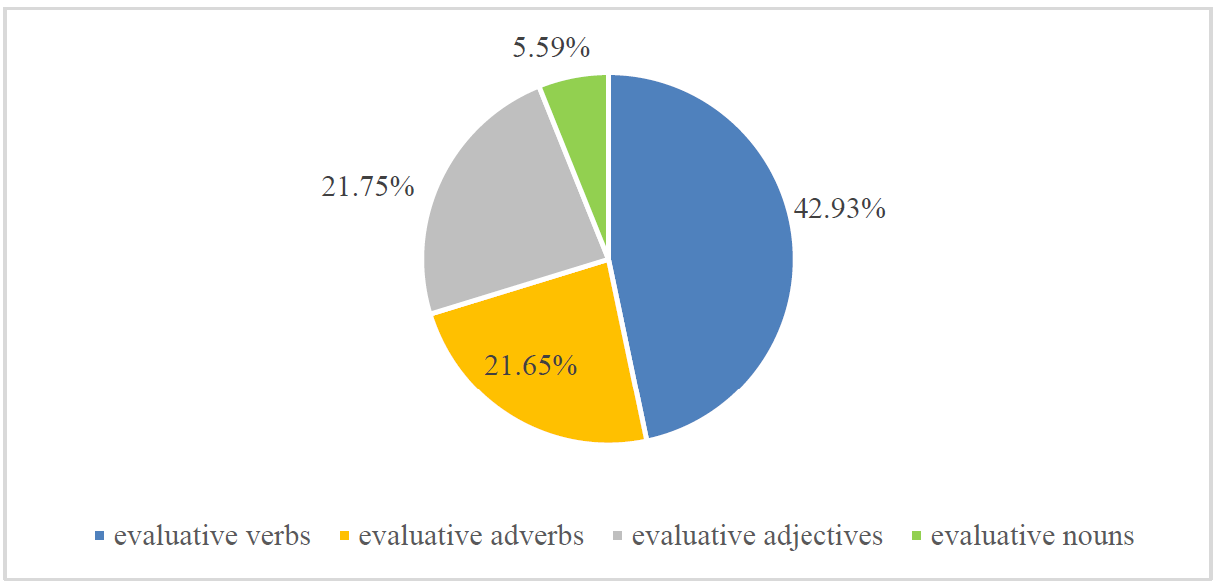
Figure 1: Distribution of evaluative words according to their grammar category
These evaluative words comprise more than 20% of all words analysed. Thus, considering the total number of 140,478 words the corpus contains, evaluative words represent 8.76% of all text in the corpus.
Regarding every rhetorical section (Figure 2), 5,407 words have an evaluative meaning in the ‘Overview’ section (30.17% of all words in that section), 5,592 words (15.92%) in ‘Lab Notes’ and 1,879 words (29.51%) in the ‘Discussion’ section.
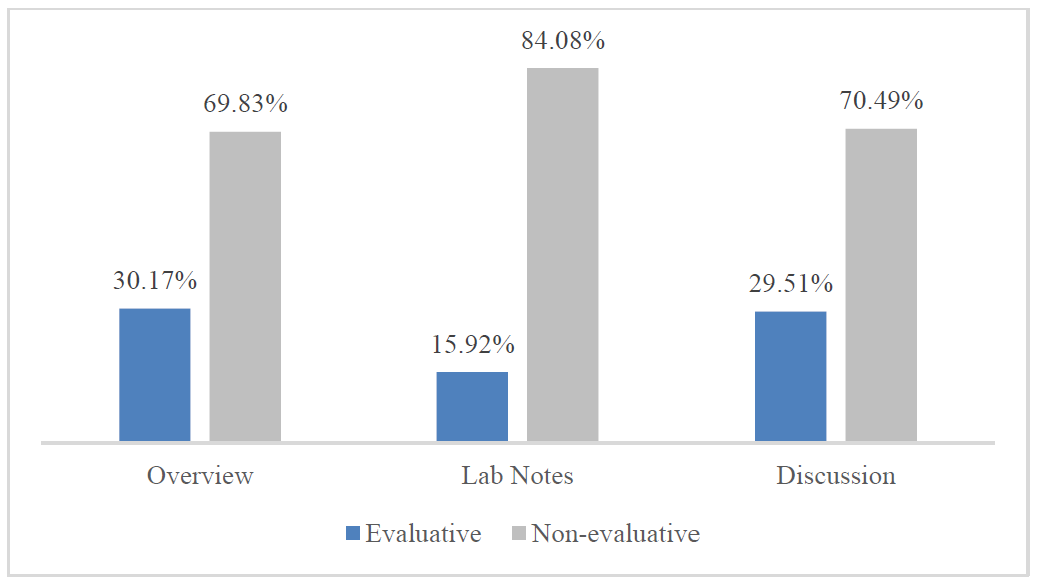
Figure 2: Proportion of evaluative and non-evaluative words in every rhetorical section
These evaluative words were further classified in charts according to Biber’s (2006: 112) taxonomy for spoken and written registers in academic discourse, which is a result of previous works by the same author (e.g., Biber et al. 1999: 353–388 and Biber 2004). This analytical framework was chosen in order to understand the functions of evaluative words in the crowdfunding proposals. Biber’s framework classifies stance words according to their grammatical domain and semantic function and distinguishes the following major structural types of stance grammatical markers: i) modal / semi-modal verbs, ii) stance adverbs, and iii) stance adjectives, verbs or nouns acting as controlling elements in complement clauses (that/to-clauses). According to Biber (1999: 967) “grammatically marked stance is the most overt manner to express stance, over value-laden word choices or paralinguistic devices”. To interpret these results, the framework of genre theory was used (Swales 2004), together with previous studies on digital genres and academic and professional discourses for genre analysis (Askehave and Nielsen 2005; Mehlenbacher 2017, 2019; Luzón and Pérez-Llantada 2022).
4. Results and analysis
4.1. Overall findings
12,490 evaluative words were classified according to their grammar category (Biber 2004, 2006).5 Table 4 shows the proportion (%) of each grammatical subcategory in the total of evaluative words found in the corpus (verbs, adverbs, adjectives, nouns).
|
Stance Category |
Subcategory |
% |
Examples
|
|
Stance Verbs |
Modals and Semimodals |
33.94% |
shall, may, be going to |
|
Attitudinal/Intentional |
19.86% |
expect, intend, aim |
|
|
Effort |
19.06% |
accomplish, facilitate |
|
|
Factive |
11.55% |
demonstrate, ensure |
|
|
Non-factive |
8.00% |
assure, assume |
|
|
Cognition |
7.59% |
think, seem
|
|
|
Stance Adverbs |
Attitude / Personal Affect |
39.00% |
extremely, simply |
|
Non-factive (Speech) |
29.85% |
enough, especially |
|
|
Factive |
19.07% |
absolutely, eventually |
|
|
Likelihood |
12.08% |
usually, apparently |
|
|
Stance Adjectives |
Evaluative |
65.03% |
amazing, dangerous
|
|
Attitudinal/Intentional |
14.36% |
amazed, aware |
|
|
Ability |
10.00% |
able, capable |
|
|
Likelihood |
5.11% |
current, likely |
|
|
Factive |
5.50% |
true, worthy |
|
|
Stance Nouns |
Attitudinal |
43.81% |
abundance, attitude
|
|
Factive |
22.66% |
conclusion, significance |
|
|
Likelihood |
20.23% |
chance, hypothesis |
|
|
Non-factive / Speech |
13.20% |
in addition, a bit
|
Table 4: Proportion (%) of each grammatical subcategory in the total of evaluative words found in the corpus
If we turn to the general data of stance words in the corpus, Figure 3 summarises the salience of stance features according to their grammatical domain, which indicates that the use of stance verbs (6,899 words; 55.23%) and, to a lesser extent, stance adjectives (2,497 words; 19.99%) are particularly important in these proposals. The fact that more than half of the stance words in the texts are verbs is significant, although it must be highlighted that many of them correspond to modal verbs (2,346 words; 18.78%), expressing possibility/permission/ability (can, could, may, might), logical necessity/obligation (must/should), and prediction/volition (will/would/shall/be going to).
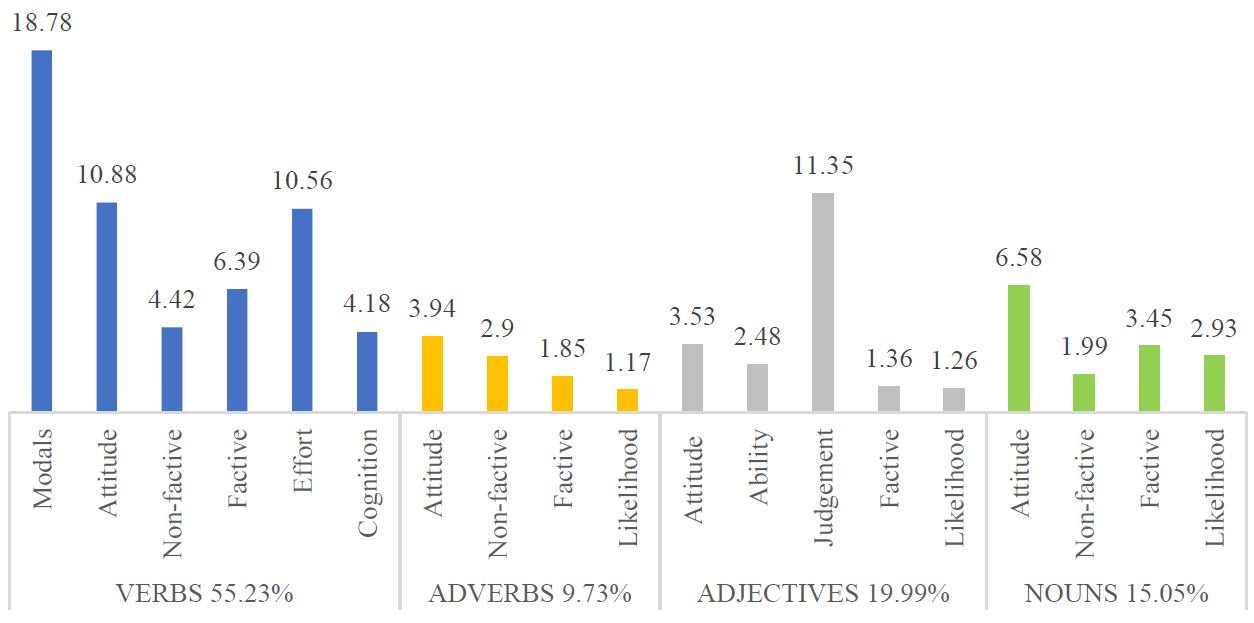
Figure 3: Distribution (%) of evaluative words expressing stance in the corpus (all sections)
Modal and semi-modal verbs are very common in conversation (Biber 2004) and while modal verbs (e.g., shall, might) have been generally on the decline over the past decades, selected modals (e.g., can and will) and selected semi-modals (e.g., be going to) are used with increasing frequencies in English (Biber et al. 1999: 221–262), as shown in examples (3) and (4).
(3) Hi Cindy, Thanks for asking! I will isolate the foraminifera from the surrounding sediment by disaggregation and sieving. [DOI: 10.18258/6079]
(4) Want more details about the finds we’ve already made at the AAS and what we hope to accomplish as research moves forward? You’re in luck, because we’re going to be participating in a Reddit Ask Me Anything event tomorrow at 1:30 PM [DOI: 10.18258/6865]
Thus, as in other genres based on written communication (e.g., text books, university catalogues and brochures; Biber 2006) verbs to mark attitudes/desire (e.g., appreciate, become, concern) (1,359 words; 10.88%) and to express effort (e.g., accomplish, manage, allow) (1,319 words; 10.56%) constitute a significant portion of all stance verbs in the corpus, controlling both that-clauses and to-clauses (e.g., we expect that; we intend to; we encourage to). These stance verbs serve to express values of effort, improvement and diligence in the proposed projects, while scientists position themselves with respect to their own commitments, humanizing the fundraising and research process, expressing their opinions, feelings and doubts, as illustrated in examples (5) to (7).
(5) As a soil scientist I appreciate knowing about research projects too. [DOI: 10.18258/11434]
(6) We encourage you to reproduce and adapt these designs to address your own unique environmental monitoring needs. [DOI: 10.18258/7455]
(7) Hopefully this project will shed more light on whether or not global warming actually exists. If I were a betting man though, I’d expect that this whole thing is a liberal conspiracy. [DOI: 10.18258/7455]
On the other hand, the presence of stance adjectives (almost 20%), which are especially common as controlling words of to-clauses (e.g., it is possible to decide; it is difficult to establish) and are typical of written registers (Biber 2006), serve primarily to express judgements (1,418 words, i.e., 11.35%; e.g., inappropriate, lovely, delicious), as shown in examples (8) and (9). These judgements are based on the personal values and believes of the scientists writing each proposal and, in many cases, may be values shared by the entire scientific community. Judgement adjectives comprise positive (e.g., good, valuable) and negative (e.g., bad, wrong, poor) adjectival evaluation (Thompson 2014).
(8) Jim, lovely to have you on board. If you are interested in coming down and helping with field work, or just visiting, we'd love to have you! [DOI: 10.18258/6913]
(9) Every dig they work hard to get us there with every shovelful of dirt, every trowel-turn of sediment, every single day spent uncovering an ancient Cretaceous coast. [DOI: 10.18258/6865]
As shown in Figure 3, attitude stance nouns are also relatively common, amounting 6.58% (1,878 words), and occurring especially in that-clauses (e.g., the expectation that creates; the support that we received). That-clauses controlled by nouns are restricted primarily to the academic registers and in them the nouns serve to identify the status of the information presented in the clauses (Biber 2006), as in example (10).
(10) The idea that humans were interacting with the Warrah’s ancestor, lends itself well to the idea that perhaps the Warrah is a remnant semi-domesticated form of its extinct ancestor. [DOI: 10.18258/3682]
Therefore, it can be deduced that the academic register plays an important and characteristic role in this type of projects, since the information they present is similar to that also presented in the antecedent of this digital genre, that is, the grant proposal (Mehlenbacher 2019). From the findings, attitudinal adverbs (e.g., correctly, perfectly) (493 words; 3.94%) and non-factive adverbs (e.g., generally, ideally) (363 words; 2.9%) also seem to be important in these projects. The former conveys an assessment of expectations when carrying out the different steps of a project or the convenience and future application of the research, as in (11) about the faunal diversity in the Mesozoic formations of Northwestern Colorado. The latter comments on the manner of conveying the scientific data of the projects or the perspective that the information is given from (12).
(11) We would greatly appreciate your support but do understand if this research does not perfectly fit what you are looking for. [DOI: 10.18258/12864]
(12) Generally, soil fertility decreases, the amount of organic matter increases, and soil texture becomes finer with forest succession. [DOI: 10.18258/6913]
4.2. Comparison of stance functions across sections
Corpus findings also show distinctive stance words in each rhetorical section (‘Overview’, ‘Lab Notes’, ‘Discussion’).6 To understand these results, it is necessary to carry out an analysis by sections that allows us to understand the representativeness of the stance words in their context and the discursive strategies they imply.
4.2.1. ‘Overview’ section
Figure 4 shows a similar tendency to that already observed in the corpus analysis of the general data (Figure1). In the ‘Overview’ section stance is carried out mainly through evaluative verbs, that is, modal and semi-modal verbs (1,068 words; 19.75%), followed by verbs of effort (e.g., require, challenge, help; 645 words; 11.92%) and attitudinal/purpose verbs (e.g., aim, hope, want: 418 words; 7.73%).
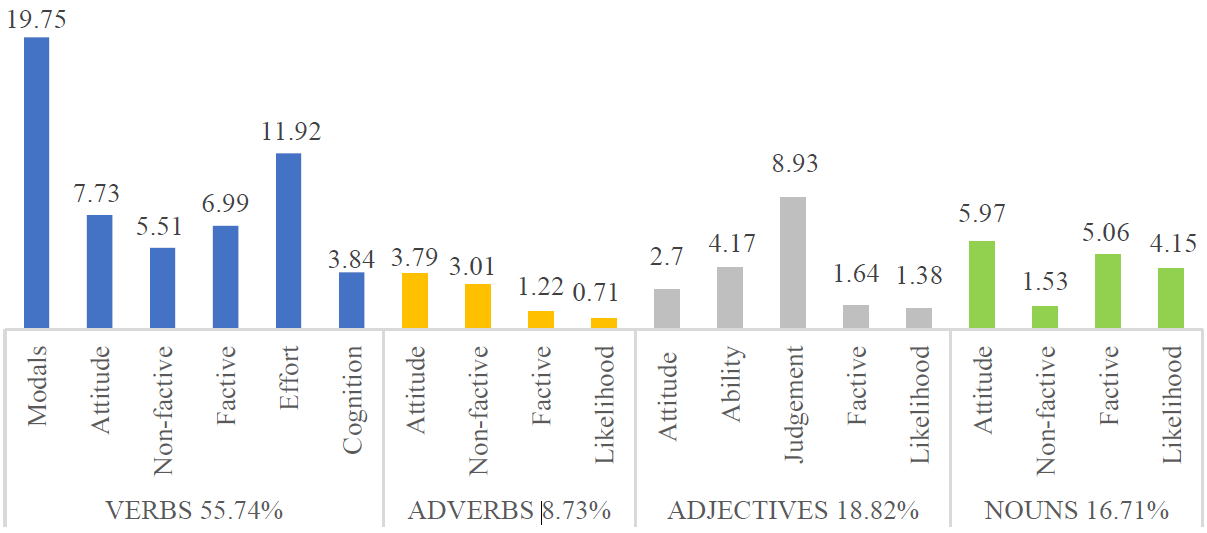
Figure 4: Distribution (%) of evaluative words expressing stance in the ‘Overview’ section
Their high recurrence indicates the importance of showing the desire, expectancies and/or determination to carry out the aims of the projects, overcoming difficulties during the collection of samples and data or due to lack of material means. This is obvious in subsections such as ‘What are the goals of the project?’ or ‘Additional information’ in which researchers can deepen in the significance and context of the project, as in (13), about the use of caves by animals in Southwest Ohio since the Pleistocene.
(13) Additionally, it is our hope that radiocarbon work for one site can help to illustrate the significance of the fossils here, which in turn can be used as a spring board for grant applications further down the road. [DOI: 10.18258/11485]
Factive verbs (e.g., know, ensure, demonstrate) (378 words; 6.99%) and non-factive verbs (e.g., predict, relate, answer;298 words; 5.51%) are also used with rather similar frequencies. Normally, scientists rely more often on non-factive verbs to report information and neutrally inform readers of their own position, whereas factive verbs are more commonly used to support their own opinions (Hyland 2002). Therefore, it can be asserted that the use of both evaluative verb categories in the ‘Overview’ section implies a balance between the presentation of scientific data in an objective manner and the writer’s own position towards them, for example, through the acceptance of the results or the potential conclusions of the projects to be crowdfunded, with verbs such as involve, show or demonstrate (see (14)).
(14) This project is important because its results will show that the simple, effective composting system could be replicated in other locations. [DOI: 10.18258/11485]
From Figure 4 it is also evident the use of judgement adjectives in this section (e.g., dramatic, relevant, great; 483 words; 8.93%), similarly to the general tendency observed in the rest of sections of these projects. Expressing personal values and ideas is particularly common in areas such as ‘Meet the Team’, in which researchers introduce themselves sometimes even writing about their hobbies or childhood, or in ‘What are the goals of this project?’ where the researcher (project launcher) can express his/her opinions about the importance of reaching the aims of their research (see (15)).
(15) This project has great potential to restore the native flora through a promising method of strawberry guava removal. [DOI: 10.18258/8423]
Also, rhetorical subsections such as ‘Endorsed by’, in which researchers receive recommendations from colleagues, and ‘Additional information’ are abundant in stance adjectives for judgment, normally controlling that/to clauses. This is exemplified in the following extract from the ‘Additional information’ section of the ‘Overview’ text of a project about soil contamination and the presence of women in the STEM workforce of Nigeria (see (16)).
(16) […] This is a thing of notable concern because it is difficult in the present-day society to address issues of national development without recourse to gender factor [DOI: 10.18258/20466]
On the other hand, the use of attitudinal nouns (e.g., effort, support; 323 words; 5.97%) and factive nouns (e.g., evidence, effect; 274 words; 5.06%) is not unexpected in this section, since discourse here presents features of the scientific discourse (i.e., objective data using an academic style in rhetorical subsections such as ‘About this project’) as in (17), combined with the expectations and justifications of the writers towards their project aims, future results or accommodation of their research in the international scientific scene (18).
(17) In addition, there is growing evidence that species diversity and composition are linked to ecosystem function in managed and natural systems, although the mechanisms behind these relationships are debated. [DOI: 10.18258/6740]
(18) Baltimore is beginning a wide-scale effort to climate-proof the city by planting more trees, installing white roofs, and other green infrastructure. Understanding urban temperature and micro-climates can help city planners […] [DOI: 10.18258/7455]
4.2.2. ‘Lab Notes’ section
‘Lab Notes’ section presents similar results to those of the ‘Overview’ section/tab, with stance verbs still conveying most of stance communicative functions in the corpus (Figure 5). This is still true with the greater use of modal verbs (961 words; 18.56%) over the rest of word categories.
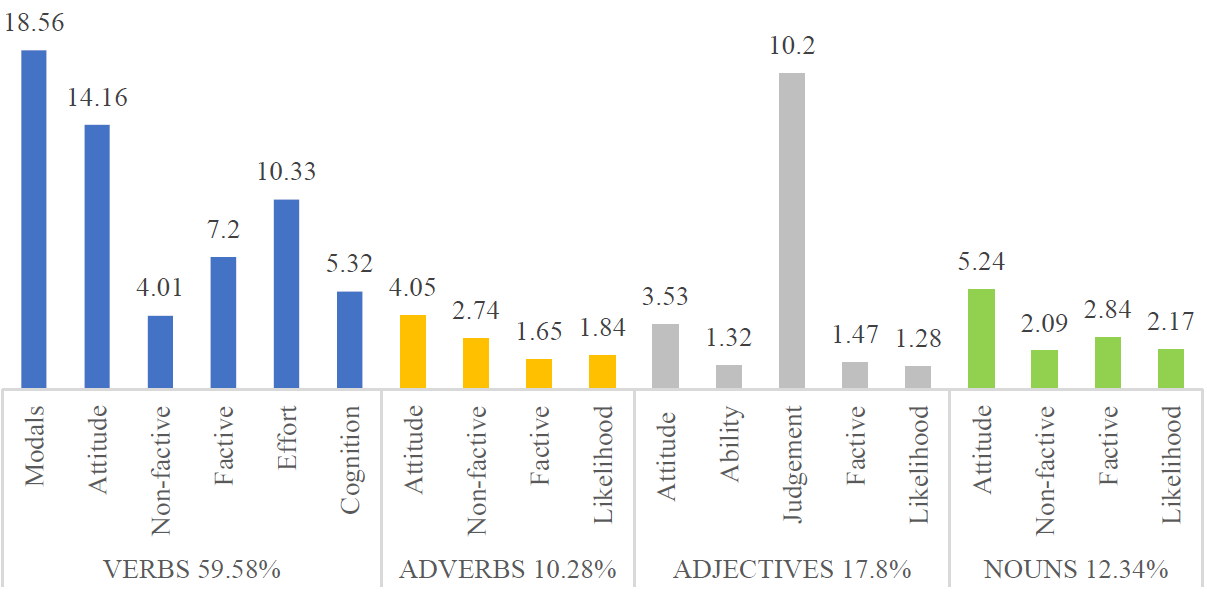
Figure 5: Distribution (%) of evaluative words expressing stance in the ‘Lab Notes’ section
In this section, scientists prefer attitudinal/purpose verbs (e.g., hope, find, appreciate; 737 words; 14.16%) to stance verbs for conveying effort (e.g., manage, encourage; 538 words; 10.33%). Whereas in the ‘Overview’ section expressing motivation, hard work and dedication are the most important aspects to convince the audience about the determination to reach the aims of the project, in the ‘Lab Notes’ section, intention and desire seem to prevail. This could be explained by the fact that this section consists of posts published as blogs would do, in which updates on specific goals in the development of the project are reported. Most of these posts narrate methodological procedures or small objectives and the purpose behind them, as in example (19) about a project dealing with the destruction of the Middle Bronze Age Civilization in North of the Dead Sea by fire.
(19) The four proposed coring sites were selected for the reasons stated in my answer my brother's question, but they were also chosen because they are away from (but still near) major wadis. I was trying to find locations that will have relatively undisturbed accumulations of alluvial strata. [DOI: 10.18258/6832]
Adjectives to express judgement (e.g., valuable, wonderful, unique) continue to be particularly relevant in this section, accounting for 10.2% (531 words). This stance category is used to examine the quality of results in the process of implementing the project and to consider and debate the benefits, as in example (20) about the quality of indoor air in Northeast Denver.
(20) What is exciting to me, is the mutually beneficial nature of CBPR. In addition to results potentially interesting to the academic community, the research can produce outcomes valuable to the participating community. [DOI: 10.18258/5329]
The use of attitudinal nouns in ‘Lab Notes’ (e.g., interest, gratitude, effort) accounts only for 5.24% (273 words) of all stance words. Attitudinal expressions are much more common in speech than in writing (Biber 2006; Pérez-Llantada 2021a; Vela-Rodrigo 2023), which would confirm the presence of conversational elements typical of spoken discourse and informal interaction in this section. Example (21) about the fauna of the floating islands in the Sargasso Sea illustrates this fact.
(21) Yet here, we have a frogfish living in the middle of the ocean. I hope that you will support my effort to understand the differences between those animals living in Sargassum in the Gulf, Sargasso Sea, and Caribbean. Please check in for frequent updates from the lab and the field! [DOI: 10.18258/4746]
4.2.3. ‘Discussion’ section
The presence of evaluative words expressing stance in the ‘Discussion’ section does not differ significantly from their incidence in the ‘Overview’ and ‘Lab Notes’ sections (Figure 6). However, in this case, adjectives to express judgement (e.g., amazing, impressive, unfair) are particularly prominent (404 words; 21.5%) among the remaining stance particles, being the most frequently used category of stance words in the whole section.
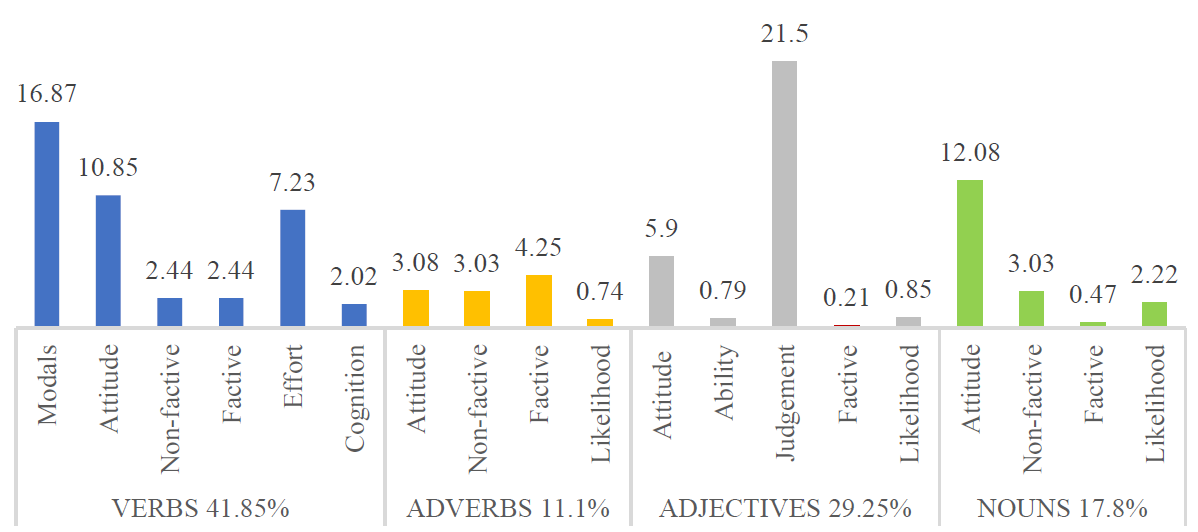
Figure 6: Distribution (%) of evaluative words expressing stance in the ‘Discussion’ section
This result is not unexpected considering the communicative function of this section, namely the exchange of ideas between writers and backers (in both directions: backer-writer/writer-backer). In here, people express their feelings and opinions openly (example 22), something that is also reflected in the prominent use of attitudinal verbs (204 words; 10.85%) (e.g., love, find, miss, admire, as in (23)) and modal verbs (317 words; 16.87%) to express ability and willingness (e.g., can, might, as in (24)).
(22) Thank you Jim! Yes, I also think it’s unfair that future generations may not get to experience nature the way they could have [DOI: 10.18258/6664]
(23) Dear Peter than you ofr (sic) your supportive comments, i am glad you found the interview worthwhile. it is such an exciting project that I love telling people about it (sic). [DOI: 10.18258/12850]
(24) Keep up the good work! I can’t wait to see if you can do it. [DOI: 10.18258/8220]
As in any other discussion fora, it is common to find formulas of courtesy or politeness (e.g., dear, thanks, thank you, with love). This colloquial discourse features foster familiarity and proximity with backers, making them participant of the research project while scientists receive moral support from backers. On the other hand, verbs to express effort (e.g., support, achieve, manage) also play a considerable role in this tab, in which backers encourage scientists to reach their goals and complete their research in time, while at the same time letting them know about the importance of their projects for society. In this section, the linguistic resources perform their communicative function of persuading the audience to support the project in a more subtle manner, since it is through gratitude and courtesy that this task is performed. For that, attitudinal nouns (e.g., luck, success, passion) also play an important role in this section, amounting to approximately 12% (227 words) of all stance particles, with backers complimenting scientists or expressing their best wishes, as in example (25).
(25) This is very exciting to help support real scientific work. Better still is I'll be helping one of my hero’s to go into the field to witness it first hand! Best of luck, and I hope you guys uncover something grand. [DOI: 10.18258/12850]
The language is therefore characterised by colloquial features since the virtual space for blogging fosters conversation (with the expected markers of orality) in the writer-backer and backer-writer directions.
5. Discussion and conclusion
The purpose of this study was to explore how evaluation in text contributes information relevant to understanding how writers communicate their attitudes and opinions and take stances when crowdfunding their scientific project proposals in online platforms. For this purpose, the stance words used in the texts (verbs, adverbs, nouns, adjectives) were identified to understand how they contribute to the organization of a text. The study also intended to widen our knowledge on the different ways used by scientists to express their expert opinion of scientific research and their attitudes about the value of their projects. To this purpose, the article revolved around three main research questions, whose answers have been addressed in light of the data obtained.
In response to RQ1 (What language features express evaluation in crowdfunding proposals?), the findings indicate that more than a half of all evaluative words are stance verbs (55.23%) and, to a lesser extent, stance adjectives (almost 20%). The fact that stance adjectives occurred in crowdfunding proposals suggests similarities between crowdfunding proposals and genres of oral discourse. For example, some adjectives in the texts analysed (e.g., pretty, wonderful, crazy, awesome) could be considered a more colloquial option to the formal adjectives typically found in academic writing. Another similarity with spoken discourse was the high use of modal and semi-modal verbs, very common in conversation (Biber 2004). Interestingly, whereas some adjectives occurring in my corpus as controlling words of to-clauses were very typical of written and more formal registers (Biber 2006), many of the most frequent adjectives in the judgement and attitude categories were positive adjectives (e.g., beautiful, amazing, cool, positive) not so expected in the impersonal style of academic writing (Thompson 2014). Therefore, the crowdfunding proposal integrates different types of discourses according to the affordances and constraints of the medium and the types of interaction they support (e.g., readers’ comments and responses, ‘Lab Notes’ updates). As shown in Section 4.1, attitudinal expressions were very common in the corpus (almost 25% of all stance words), a typical feature of speech compared to writing contexts (Biber 2006), which indicates that the genre investigated appears to be characterised a hybrid discourse style with both elements of written and oral discourse referring a certain colloquialization of the academic discourse. This fact would reflect the social action that the genre enacts, helping the democratization of science agenda that is making science more participatory to a broader audience (Follet and Strezov 2015). This may also explain that the prevalence of to-clauses over that-clauses in the corpus also has a clear functionality: explaining or making explicit the purpose of the project or the purpose of the activity carried out by the researcher.
Concerning how stance is conveyed in the different sections (‘Overview’, ‘Lab Notes’, ‘Discussion’), the analysis displayed similarities among them. They all relied on modal verbs primarily, the use of will being especially relevant to explain with certainty how their expected scientific contribution will address the project goals. In addition, the modal will also served to convey “immediacy of action and intentionally, or willingness to move the project forward” (Luzón and Pérez-Llantada 2022: 125). The presence of these features is not surprising, as one of the main communicative purposes of the discourse of crowdfunding proposals is to build credibility and ultimately to persuade their audiences to support their research with donations. However, whereas the less formal discourse in the ‘Lab Notes’ and the ‘Discussion’ sections involved a profuse use of attitudinal verbs, the ‘Overview’ section was richer in verbs of effort. The researchers created a persuasive appeal for their potential backers transmitting courage, tenacity and determination to carry out the project with endeavour. Also in the ‘Overview’ section, stance adjectives of judgement were used to claim significance of the project, being especially relevant in the more colloquial ‘Discussion’ and ‘Lab Notes’ sections. The findings showed that these adjectives also served to transmit the personal values of the writers, helping to create proximity with the backers, as also happens in tweets written by scholars and researchers that aim to engage readers (Luzón 2023). It is also worth highlighting the use of attitudinal stance nouns (controlling to-clauses) in all the three sections, especially with a positive meaning. The expression of evaluative judgment through nouns helps to persuade readers of the writers’ right to speak with authority and to establish their reputations (Jiang and Hyland 2015), especially important in the ‘Overview’/‘Methods’, whereas the prominent use of attitudinal nouns in the ‘Discussion’ sections seemed to respond to the brevity of the sentences here based on greetings, good wishes and brief comments. This is also constrained by the limited space of the medium in this section, similarly to other digital genres such as Twitter (Villares 2023).
Regarding RQ2 (What communicative functions do these evaluative words perform in the texts analysed?), the corpus data showed that in these proposals stance adjectives to express judgements alongside those to express ability were used rhetorically to construct the identity of the project launchers, especially in the ‘Overview’ of the project. In this section, researchers need to answer questions such as ‘What is the context of this research?’, presenting themselves as experts in ‘Meet the Team’, or creating an emotional bond with the audience through a biographical story telling. Since emotive stance particles, especially adjectives, are rare in academic writing, the more academic nature of the ‘Overview’ section, in which scientific data are presented as they would be expected in canonical scientific papers, tend to be “institutionalized” (Martin 2000: 155) semantic choices of emotional values as judgement values in online proposals, as Scotto di Carlo (2014) also reports for the case of TED talks. Hence, adjectives of judgment are used to express capacity, resolution and veracity in the presentation of scientific data (Martin 2000), which, in turn, helps to construct the researchers’ professional identity (Pérez-Llantada 2024b). Thus, attitudinal adjectives express prominence, intellect and pragmatic functions (see McGrath and Kuteeva 2012 for the case of pure maths research articles), highlighting the similarity of crowdfunding proposals with other knowledge dissemination genres for public understanding and audience engagement in science, such as TED talks (Scotto di Carlo 2014) and citizen science projects (Pérez-Llantada 2021b, 2023). In TED talks, adjectives were used to emphasise the importance of scientists’ contribution to the academic community (Scotto di Carlo 2014) while creating proximity with the audience in a way similar to crowdfunding proposals. In citizen science projects (Pérez-Llantada 2021b, 2023), evaluative adjectives and adverbs together with I/we pronouns and static (epistemic/mental) verbs (e.g., think, wonder) help to create researchers’ identities, constructing competent, credible and trustable selves to appeal to the audience’s pathos.
Also, the ‘Discussion’ section, which is a space for microblogging in which to express the backers’ interest in the content of the research, involved evaluation through adjectives that expressed accuracy (e.g., true, right, wrong), quality or emotions. This is a recurrent feature of other digital genres such as academic weblogs (Luzón 2012) and tweets (Villares 2023). These genres used posts to present comments to engage in discussions. The high presence of both positive and negative attitudinal and judgement adjectives in the ‘Discussion’ section indicated that they worked as interactive resources, especially for backers to congratulate researchers profusely or to express interest (and objections) in the projects. Conversely, the most frequent stance particles in the ‘Overview’ and ‘Lab Notes’ sections, that is, modal, attitude, effort verbs and judgement, attitudinal adjectives, mostly evaluated elements within the presentation/adequacy of the research and the budget and expertise of researchers, being therefore used for informative and engagement purposes (i.e., context and significance of the projects, social and scientific impact when backing). This suggests that crowdfunding platforms as Experiment.com are seen as a space for science education and science support. Thus, the majority of the stance words in these sections served to express opinions (attitudes and judgments of value), in line with other popularization genres (e.g., TED talks in Scotto di Carlo 2014 or academic blogs in Luzón 2013), using these linguistic features to indicate affective responses or reactions to the research carried out.
On the other hand, by making judgements and comparisons about protocols and the research process in the ‘Methods’ and ‘Lab Notes’ tabs, writers construct their identity and authority as members of the scientific community while at the same time enhancing the visibility and transparency of their work. Expressing attitudes and opinions in these sections is important for that identity construction. The study findings also suggest that stance adverbials are not common in these projects, although in conversational texts, as in the ‘Discussion’ section, their presence is higher, as it normally occurs in conversation (Conrad and Biber 2000), especially used to mark suggestions, serving to agree with the researchers and their projects. Interestingly, most comments in this section, as well as in the ‘Lab Notes’ section, were positive, contrary to what happens in other digital genres such as microblogs (e.g., Reddit) in which popular science is perceived as untrustworthy (Batchelor 2023).
Lastly and more broadly, in response to RQ3 (How does the communicative function of evaluation, as a rhetorical strategy, reflect the communicative purposes and social action of the genre?), this exploratory study has shown that in crowdfunding proposals online evaluation is important to understand how scientists express their values and opinions about their scientific research in order to reveal themselves as socially situated writers. As seen in the examples, they used stance to construct their identities (in terms of professionalism, importance and transparency) and depict themselves as capable subjects to carry out their research out of the traditional grant circuits and to seek social participation within the scientific community. At the level of rhetorical organization, scientists followed different moves and steps when writing a crowdfunding proposal online in order to present the information about their research to wider lay audiences (Mehlenbacher 2017, 2019) which must be convincing of the importance of the project for the benefit of society. In the same way, at the level of discourse they appear to choose between “rhetorical strategies from a network of linguistic/non-linguistic strategies and end up with their (more or less) personalised versions of this genre” (Askehave and Nielsen 2005: 123).
Aligning with stance studies of other digital genres such as academic blogs, popular science articles, and Twitter (e.g. Bondi 2009; Mauranen 2021; Batchelor 2023; Villares 2023), the results of the present study suggest that the functionality of evaluative features is a response to the rhetorical situation underpinning the genre as a social action. As seen in the corpus, the evaluative features in the different rhetorical sections or tabs fulfil several functional goals. Not only do they express the writers’ opinions about their scientific research, but they also serve to construct an identity and build a relationship with potential backers. The inclusion of evaluative features in rhetorical sections such as ‘Meet the Team’ serves to engage the audience, helping them to empathize with the researchers through biographical data rich in attitudinal adjectives, and to persuade them of the campaign’s intent. In addition, by using accessible language, researchers present their updates and steps forward in their project in a detailed and captivating way, engaging backers in the research process. This way, crowdfunding campaigns transform knowledge dissemination into an educational (didactic) reading that makes science accessible and decipherable to the general public. For crowdfunding proposals, an appeal to a large and diversified audience requires accommodating one’s rhetorical efforts to this audience (Mehlenbacher 2019) and that complex audience implies a shift in the use of stance as a strategy to raise funds and educate in science, for example, stating scientific implications in such a way that are also obvious to non-experts, while transmitting an image of professionalism. It is also worth noting that stance conveying through the use of evaluative grammatical categories in these projects allows to know the scientists’ opinion concerning the likelihood of the projects, expressing style stance (Conrad and Biber 2000) in order to contextualise scientific discourse and express the possibilities for carrying out the projects if the necessary funding is raised. The use of stance features in crowdfunding campaigns allows the audience to understand and accept the researchers’ perspective, also guiding the audience to accept their claims, and thus it will be more prone to act on the researchers’ call-to-action. There was evidence in the corpus data that the use of attitudinal verbs and adjectives alongside positive judgment adjectives helped crowdfunding writers to emphasise the noteworthiness of their projects’ content and “the positive aspects connected to the world of science” (Scotto di Carlo 2014: 214).
This exploratory work is, however, limited by the small size of the corpus, which has conditioned the analysis at the section/tab level. On the other hand, the lack of inferential statistical analysis to corroborate and/or refute the differences found between grammatical categories and between the use of stance markers in the different sections of these proposals has also been a limitation. Thus, this study leaves many analytical gaps to be filled in future research using inferential statistics. Although the finding suggest that language features to express evaluation are used to realize specific rhetorical functions in the proposals (e.g., inform, greet, express admiration) it would be important to explore the use of the different grammatical categories of stance in the projects according to variables such as the scientists’ expertise in the field (i.e., whether they relate to expertise in the field, that is junior or senior researchers) and expertise and prior knowledge in composing science-related texts. Ethnomethodologically informed studies (i.e., interviews) could shed new light on the degree of consciousness or awareness when using these stance grammar categories in line with other studies about attitudinal and epistemic stance (e.g., Martin and White 2005; Hyland 2005). It is important to know the level of awareness of the use of evaluative language in composing these proposals and their rhetorical effects. Knowledge of composing strategies across genres, modes and media can support researchers when they want or need to compose a project proposal (e.g., the use of language for the creation of a scientific community and collaboration, the use of language for identity construction, the use of language for social commitment and tolerance).
References
Askehave, Inger and Anne E. Nielsen. 2005. Digital genres: A challenge to traditional genre theory. Information Technology and People 18/2: 120–141.
Batchelor, Jordan. 2023. Just another clickbait title: A corpus-driven investigation of negative attitudes toward science on Reddit. Public Understanding of Science 32/5: 580–595.
Biber, Douglas. 2004. Historical patterns for the grammatical marking of stance: A cross-register comparison. Journal of Historical Pragmatics 5: 107–136.
Biber, Douglas. 2006. University Language: A Corpus-Based Study of Spoken and Written Registers. Amsterdam: John Benjamins.
Biber, Douglas and Edward Finegan. 1989. Styles of stance in English: Lexical and grammatical marking of evidentiality and affect. Text 9: 93–124.
Biber, Douglas, Stig Johansson, Geoffrey Leech, Susan Conrad and Edward Finegan. 1999. Longman Grammar of Spoken and Written English. London: Pearson Education Ltd.
Bondi, Marina. 2009. Perspective and position in museum websites. In Sara Radighieri and Paul Tucker eds. Point of View. Description and Evaluation across Discourses. Roma: Officina Edizioni, 113–127.
Brezina, Vaclav and William Platt. 2023. #LancsBox v. 6.x. [software package].
Camiciotti, Gabriella del Lungo and Elena Tognini-Bonelli eds. 2004. Academic Discourse: New Insights into Evaluation. Bern: Peter Lang.
Conrad, Susan and Douglas Biber. 2000. Adverbial marking of stance in speech and writing. In Susan Hunston and Geoffrey Thompson eds. Evaluation in Text: Authorial Stance and the Construction of Discourse. Oxford: Oxford University Press, 56–73.
Dave, Kushal, Steve Lawrence and David M. Pennock. 2003. Mining the peanut gallery: Opinion extraction and semantic classification of product reviews. In Proceedings of the 12th International Conference on World Wide Web (WWW’03). New York: Association for Computing Machinery: 519–528. https://dl.acm.org/doi/10.1145/775152.775226
De Waard, Anita and Henk Pander Maat. 2012. Epistemic modality and knowledge attribution in scientific discourse: A taxonomy of types and overview of features. In Haizhou Li, Chin-Yew Lin, Miles Osborne, Gary Geunbae Lee and Jong C. Park eds. Proceedings of the Workshop on Detecting Structure in Scholarly Discourse. Jeju Island, Korea: Association for Computational Linguistics, 47–55. https://aclanthology.org/W12-4306.pdf
Englebretson, Robert. 2007. Stancetaking in discourse: An introduction. In Robert Englebretson ed. Stancetaking in Discourse: Subjectivity, Evaluation, Interaction. Amsterdam: John Benjamins, 1–25.
Follett, Ria and Vladimir Strezov. 2015. An analysis of citizen science based research: Usage and publication patterns. PLoS ONE 10/11: e0143687. https://doi.org/10.1371/journal.pone.0143687
Goźdź-Roszkowski, Stanislaw and Susan Hunston. 2016. Corpora and beyond. Investigating evaluation in discourse: Introduction to the special issue on corpus approaches to evaluation. Corpora 11/2: 131–141.
Hunston, Susan. 1989. Evaluation in Experimental Research Articles. Birmingham: University of Birmingham dissertation.
Hunston, Susan. 2002. Corpora in Applied Linguistics. Cambridge: Cambridge University Press.
Hunston, Susan. 2007. Semantic prosody revisited. International Journal of Corpus Linguistics 12: 249–268.
Hunston, Susan. 2011. Corpus Approaches to Evaluation: Phraseology and Evaluative Language. London: Routledge.
Hunston, Susan and John Sinclair. 2000. Towards a local grammar of evaluation. In Susan Hunston and Geoffrey Thompson eds. Evaluation in Text: Authorial Stance and the Construction of Discourse. Oxford: Oxford University Press, 74–101.
Hyland, Ken. 1999. Academic attribution: Citation and the construction of disciplinary knowledge. Applied Linguistics 20: 341–367.
Hyland, Ken. 2002. Activity and evaluation: Reporting practices in academic writing. In John Flowerdew ed. Academic Discourse. London: Longman, 115–130.
Hyland, Ken. 2005. Stance and engagement: A model of interaction in academic discourse. Discourse Studies 7/2: 173–192.
Hyland, Ken and Feng Jiang. 2017. Is academic writing becoming more informal? English for Specific Purposes 45: 40–51. https://doi.org/10.1016/j.esp.2016.09.001
Jiang, Feng and Ken Hyland. 2015. ‘The fact that’: Stance nouns in disciplinary writing. Discourse Studies 17/5: 529–550.
Luzón, María José. 2012. ‘Your argument is wrong’: A contribution to the study of evaluation in academic weblogs. Text & Talk 32/2: 145 – 165.
Luzón, María José. 2013. Public communication of science in blogs: Recontextualizing scientific discourse for a diversified audience. Written Communication 30: 428–457.
Luzón, María José. 2023. Multimodal practices of research groups in Twitter: An analysis of stance and engagement. English for Specific Purposes 70: 17–32.
Luzón, María José and Sofía Albero-Posac. 2020. ‘Had a lovely week at #conference2018’: An analysis of interaction through conference tweets. RELC Journal 51/1: 33–51.
Luzón, María José and Carmen Pérez-Llantada. 2022. Digital Genres in Academic Knowledge Production and Communication: Perspectives and Practices. Bristol: Multilingual Matters.
Lyons, John. 1981. Language and Linguistics: An Introduction. Cambridge: Cambridge University Press.
Martin, James Robert. 2000. Close reading: Functional linguistics as a tool for critical discourse analysis. In Len Unsworth ed. Researching Language in Schools and Communities. London: Cassell, 275–302.
Martin, James Robert and Peter R. White. 2005. The Language of Evaluation. New York: Palgrave Macmillan.
Mauranen, Anna. 2002.‘A good question’: Expressing evaluation in academic speech. In Giuseppina Cortese and Peter Riley eds. Domain-specific English: Textual Practices Across Communities and Classrooms. Bern: Peter Lang, 115–140.
Mauranen, Anna. 2003. The corpus of English as lingua franca in academic settings. TESOL Quarterly 37/3: 513–527.
Mauranen, Anna. 2021. ‘Gonna write about it on my blog too’: Metadiscourse in research blog discussions. In Larissa D’Angelo, Anna Mauranen and Stefania Maci eds. Metadiscourse in Digital Communication: New Research, Approaches, and Methodologies). London: Palgrave Macmillan, 11–35.
McGrath, Lisa and Maria Kuteeva. 2012. Stance and engagement in pure mathematics research articles: Linking discourse features to disciplinary practices. English for Specific Purposes 31/3: 161–173.
Mehlenbacher, Ashley Rose. 2017. Crowdfunding science: Exigencies and strategies in an emerging genre of science communication. Technical Communication Quarterly 26/2: 127–144.
Mehlenbacher, Ashley Rose. 2019. Science Communication Online: Engaging Experts and Publics on the Internet. Ohio: The Ohio State University Press.
Millar, Neil, Bojan Batalo and Brian Budgell. 2023. Trends in the use of promotional language (hype) in abstracts of successful national institutes of health grant applications. JAMA Netw Open 5/8: 1985–2020.
Nasukawa, Tetsuya and Jeonghee Yi. 2003. Sentiment analysis: Capturing favorability using natural language processing. In John H. Gennari, Bruce W. Porter and Yolanda Gil eds. Proceedings of the 2nd International Conference on Knowledge Capture. Sanibel Island, FL, USA: Association for Computing Machinery, 70–77. http://dx.doi.org/10.1145/945645.945658
Pérez-Llantada, Carmen. 2021a. Grammar features and discourse style in digital genres: The case of science-focused crowdfunding projects. Revista Signos 54/105: 73–96.
Pérez-Llantada, Carmen. 2021b. Research Genres Across Languages. Cambridge: Cambridge University Press.
Pérez-Llantada, Carmen. 2022. Online data articles: The language of intersubjective stance in a rhetorical hybrid. Language Communication 39/3: 400–425.
Pérez-Llantada, Carmen. 2024a. Approaching digital genre composing through reflective pedagogical praxis. Journal of English for Academic Purposes 68: article 101349.
Pérez-Llantada, Carmen. 2024b. Identity construction in digital communication for public engagement in science. Discourse Studies 27/1: 128–145.
https://doi.org/10.1177/14614456241255267
Pérez-Llantada, Carmen and María José Luzón. 2023. Genre Networks. Intersemiotic Relations in Digital Science Communication. New York: Routledge.
Rahimpour, Sepideh. 2014. Blogs: A resource of online interactions to develop stance-taking. Procedia. Social and Behavioral Sciences 98: 1502–1507.
Sancho-Guinda, Carmen and Ken Hyland eds. 2012. Stance and Voice in Written Academic Genres. New York: Palgrave-McMillan.
Scotto di Carlo, Giuseppina. 2014. The role of proximity in online popularisations: The case of TED talks. Discourse Studies 16/5: 591–606.
Shaw, Philip. 2003. Evaluation and promotion across languages. Journal of English for Academic Purposes 2: 343–357.
Smith, Alison. 2015. ‘Wow, I didn’t know that before; thank you’: How scientists use Twitter for public engagement. Journal of Promotional Communications 3/3: 320–339.
Swales, John M. 2004. Research Genres. Explorations and Applications. Cambridge: Cambridge University Press.
Swales, John M. and Amy Burke. 2003. ‘It’s really fascinating work’: Differences in evaluative adjectives across academic registers. In Pepi Leistyna and Charles F. Meyer eds. Corpus Analysis. Language and Structure and Language Use. Amsterdam/New York: Editions Rodopi, 1–18.
Thompson, Geoffrey. 2014. Introducing Functional Grammar (third edition). London: Routledge.
Thompson, Geoffrey and Susan Hunston. 2000. Evaluation: An introduction. In Geoffrey Thompson and Susan Hunston eds. Evaluation in Text: Authorial Stance and the Construction of Discourse. Oxford: Oxford University Press, 1–27.
Turney, Peter. 2002. Thumbs up or thumbs down? Semantic orientation applied to unsupervised classification of reviews. Proceedings of the 40th Annual Meeting of the Association for Computational Linguistics (ACL), Philadelphia. July 2002: 417–424.
Vela-Rodrigo, Alberto Á. 2023. A lexical bundle analysis of art-related crowdfunding projects. Ibérica, Journal of the European Association of Languages for Specific Purposes 46: 321–349.
Vela-Rodrigo, Alberto Á. 2025 (in press). A case study for the analysis of the rhetoric of crowdfunding communication. LFE: Revista de Lenguas para Fines Específicos, 31.
Villares, Rosana. 2023. Twitter conference presentations: A rhetorical and semiotic analysis of an emerging digital genre. ELIA: Estudios de Lingüística Inglesa Aplicada 22: 125–167.
Zou, Hang and Ken Hyland. 2019. Reworking research: Interactions in academic articles and blogs. Discourse Studies 21/6: 713–733.
Notes
1 The research conducted in this article has been funded by the Spanish Ministry of Economy and the State Research Agency under the project Digital Genres and Open Science: an analysis of processes of hybridization, innovation and generic interdiscursivity (PID2019-105655RB-I00) and the project Genre networks for science communication and dissemination online: Exploring genre interactions and language variation in Web 2.0 (GENNET2.0) (PID2023-148454NB-100). I also thank the support of the Government of Aragón to the research group Comunicación Internacional y Retos Sociales (CIRES; H16_23R). This article is a contribution to the research conducted in the Institute of Biocomputation and Physics of Complex Systems (BIFI) of the University of Zaragoza and a contribution to the project Digital Language and Communication Resources for EU Scientists (DILAN) (2022-1-ES01-KA220-HED-000086749) funded by the European Commission. [Back]
2 https://experiment.com [Back]
3 https://mega.nz/file/CrZkUJiL#lxBgfOyD_o33MkbdI4uJAx_PUyVIGWR_Lxn0NyfBl34 [Back]
4 Lists downloadable at https://mega.nz/folder/DzpAlaAD#DwGhjIzJSoooHWlKYckNYg [Back]
5 Lists of stance words downloadable at https://mega.nz/file/nrY3BIBS#HxAcdF5cpyqUtwbbYZKfaj2_0SkUYx0ffE_FGos9C_8 [Back]
6 Lists of stance words in each rhetorical section downloadable at: https://mega.nz/file/vvY1HJ4b#pY4KNgFouBc_pI3J32DkF5v7EpkYlrx5FJORgGSB29s [Back]
Corresponding author
Alberto Ángel Vela-Rodrigo
University of Zaragoza
Faculty of Social and Human Sciences
Department of English and German Studies
Campus in Teruel
C/ Atarazanas, 4
44003, Teruel
Spain
E-mail: vela@unizar.es
received: October 2024
accepted: April 2025